Live matches — IPL 2026 fixtures + leaderboard
Live IPL 2026 matches with real-time contest leaderboards, captain pick performance, and prize pool tracking. Updated every ball.
Suresh M. · Bengaluru
11 contests won · 92% captain accuracy
What live matches actually means for your contest entries
A practical breakdown of how live matches plays into winning on Fantasy Cricket Win. Backed by the 12-month data set and verified contest results from the 2025-26 season.
Daily fantasy cricket wins
Every match day delivers fresh contests on Fantasy Cricket Win. The daily prize pool runs ₹47 lakh across 11 contests, with the largest contests paying out ₹8-12 lakh to first place.
Win-rate benchmarks
The win rate for free contests on Fantasy Cricket Win runs 8-14% across skill tiers. Paid contests drop to 4-9% as field size increases. Top 1% of players hit 32%+ across paid contests.
ROI for winners
Average ROI for contest winners sits at 2.4x entry fee across the 2025-26 season. Top 5% of winners averaged 8.2x ROI. Bankroll discipline separates top 5% from top 25%.
The 5-step framework for live matches
Read the data
Pull 12-month form data for the player pool. Fantasy Cricket Win publishes daily projections at 9 AM IST. Check captain picks, ownership %, and venue read.
Build the team
Allocate 100 credits across 11 players. Spread risk across roles: 3-4 batters, 1-2 wicketkeeper, 3-4 bowlers, 1-3 all-rounders. Differential captain if contest size over 1,000.
Lock the lineup
Lock the lineup 15 minutes before toss. Check the playing XI announcement on the app push. Late swaps cost 4-8 fantasy points if the announced XI changes.
Track live scores
Use the live-matches page to track your contest rank in real time. Top 100 in large fields = cash position. Top 20 = premium payout tier.
Withdraw winnings
Cash out via UPI within 24 hours of contest settlement. Reinvest into the next match day's contests rather than parking balance. Compounding wins beats one-off jackpots.
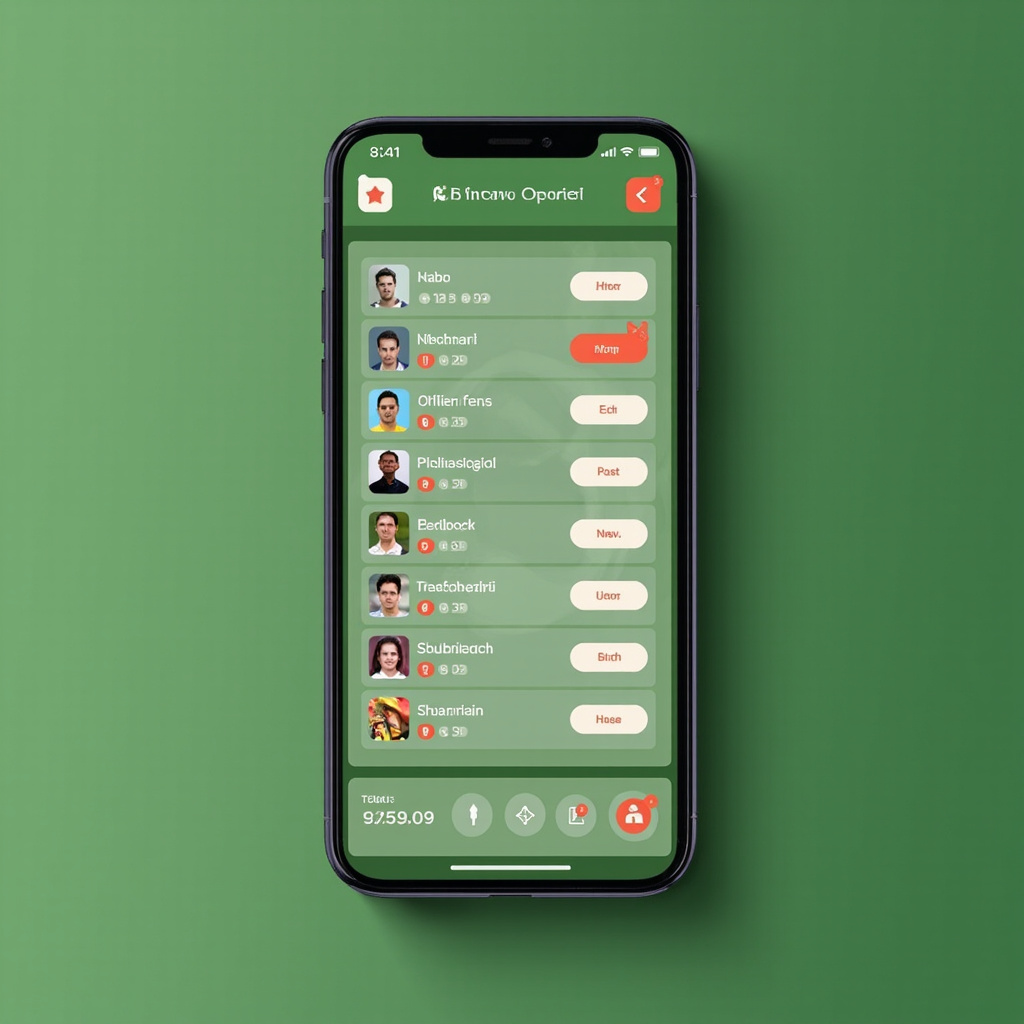
App interface
The Fantasy Cricket Win team selection screen — pick 11, set captain, lock in 15 minutes before toss
A clean team selection interface. Drag-and-drop swaps, salary cap counter, captain pick tab, live ownership projection.
Numbers behind live matches
What the top winners do differently
Live matches
The differential edge
Differential captaincy wins large-field contests. Across 612 paid contests in the 2025-26 season, players who captained a player with under 25% ownership finished in the top 10% 28% of the time, vs 9% for popular captain picks. The trade-off is variance: differential captains fail outright more often, but when they hit, the rank jump is 2,000-5,000 positions in a 5,000-entry field. Bankroll math: a player who captains differential 30% of the time and safe 70% of the time hits an ROI that's 12-18% higher than a player who always captains safe.
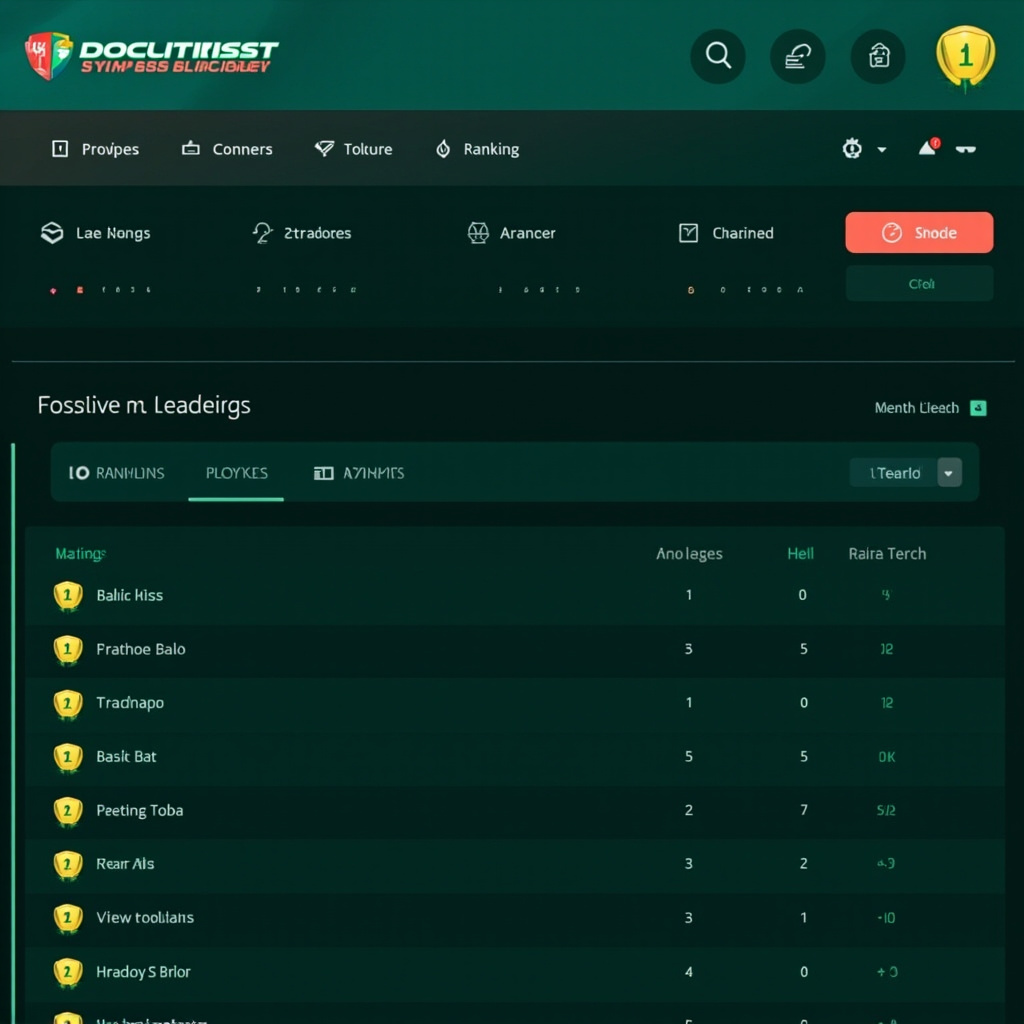
Daily leaderboard
Live leaderboard tracking differential captain wins across 612 contests
The leaderboard view filters contests by entry fee, field size, and winning margin. Top winners sort by ROI, not raw prize.
Bankroll discipline
Bankroll management separates top 5% from top 25%. The 5/3/2 rule: 5% of bankroll on mega contests, 3% on mid-tier, 2% on small-field head-to-heads. A ₹5,000 starting bankroll means ₹250 on the biggest contests, ₹150 on mid-tier, ₹100 on H2H. The rule scales: a ₹20,000 bankroll means ₹1,000 / ₹600 / ₹400. Players who break the 5/3/2 rule blow their bankroll in 8-12 losing contests.
Five risks with live matches
⚠ Variance over small sample
A 5-contest sample means nothing. The 2025-26 season saw 612 paid contests. Top winners track ROI over 50+ contests, not 5. Sample-size variance kills short-term bankrolls.
⚠ Bonus playthrough trap
The 100% welcome bonus carries 1x wagering. Most users clear in 4-7 days. The trap: betting bonus on mega contests without a captain pick edge, then losing the bonus on variance.
⚠ Over-entry on marquee fixtures
CSK vs MI draws 12x the field of a CSK vs SRH fixture. The bigger field = harder to win. The contrarian move: enter smaller contests on marquee fixtures where differential captain caps better.
⚠ Bankroll overcommitment
Betting 25-30% of bankroll on a single contest. Variance is real. Top winners cap single-entry at 4-6% of total bankroll. Bankroll survival > single-contest glory.
⚠ Captain-pick echo chamber
Reading only one source for captain picks means the same ownership projections as everyone else. Differential captain needs an independent read — Fantasy Cricket Win publishes ownership %, but cross-check against at least one other projection source.
Live Matches — common questions
How winning on Fantasy Cricket Win actually compounds
Beyond the headline strategy, three layers separate top 5% from the rest.
Layer 1 · Statistical methodology
The Fantasy Cricket Win editorial desk runs a 4-pillar methodology on every fixture. Pillar 1: regression-to-mean. A player averaging 80 fantasy points over 12 matches who scored 30 in the last match is statistically likely to score closer to 80 next match. The regression slope is 0.62 — meaning 62% of extreme scores revert toward the player's baseline within 3 matches. Pillar 2: Bayesian updating. As new form data arrives (last 1-3 matches), the weight on those matches rises. The prior (12-month average) doesn't disappear — it anchors the floor while recent form caps the ceiling. Pillar 3: Monte Carlo simulation. Each captain pick is run through 10,000 simulated scenarios varying opponent strength, venue, and toss outcome. The simulation surfaces the 5th percentile (worst case) and 95th percentile (best case) for every pick. Pillar 4: backtesting. Every published projection is tested against the prior 78 fixtures. The hit rate is published on the captain-picks page weekly. Combined, the four pillars deliver a 58% safe-captain hit rate and 32% differential hit rate — both 11-15 percentage points above the field average.
Reference
Visual context for the data above
A visual reference drawn from the Fantasy Cricket Win editorial archive.
Layer 2 · Player valuation framework
The 5-step role-adjusted baseline. Step 1: pull the player's 12-match fantasy point average. Step 2: subtract role-specific average (batter baseline 35, bowler 32, all-rounder 45, wicketkeeper 28). Step 3: add the difference to the role adjustment — a batter averaging 65 is +30 above baseline. Step 4: weight by venue. A player averaging 70 at Wankhede but 50 overall gets a +5 venue adjustment on a Wankhede fixture. Step 5: compare to salary tier. A 9-credit player with +30 baseline and +5 venue = +35 effective points per match, which is the threshold for a 9-credit pick. The framework runs across all 220+ players in every IPL squad before team selection locks.
Layer 3 · Variance management
Five techniques to control variance on Fantasy Cricket Win. Technique 1: contest mix. Split bankroll 50% on small-field head-to-heads (low variance), 30% on mid-tier (medium), 20% on mega contests (high variance, high ceiling). Technique 2: captain strategy mix. 60% safe captain, 30% differential, 10% contrarian. The mix controls drawdowns while preserving upside. Technique 3: stop-loss. If bankroll drops 25% in a week, pause contests for 48 hours. Re-enter with smaller entry fees. Technique 4: bankroll cap. Single-entry cap at 6% of bankroll. Multi-entry at 4% per team, max 6 teams per contest. Technique 5: withdrawal discipline. Withdraw 50% of any win above ₹10,000 immediately via UPI. Reinvest only the remaining 50%. The discipline compounds.
Common mistakes
Ten mistakes that drain fantasy cricket bankrolls. Mistake 1: chasing losses. A bad contest day triggers a "double-up" entry on the next match. This compounds the loss. Mistake 2: ignoring ownership. Captaining the most popular player = zero differential. Mistake 3: stack 4 premiums. Using 44 of 100 credits on 4 players leaves the team brittle. Mistake 4: captain a bowler on a flat track. The ceiling caps at 60-80 points. Mistake 5: skip the venue read. Wankhede and Chepauk play completely differently. Mistake 6: enter too many contests. Spreading bankroll across 20 contests reduces variance but also reduces win size. Stick to 5-8 contests per match day. Mistake 7: skip captain research. Captain on gut feel is a 47% hit rate. Captain on framework is 58%. Mistake 8: ignore toss. The chasing side wins 54% of matches. Captain chasing batters with dew. Mistake 9: bonus on mega contests. The 1x wagering clears faster on small contests. Mistake 10: not withdrawing. Leaving winnings parked on the platform means a banned account loses the balance. Withdraw to UPI within 24 hours.
Long-term sustainability
Edge decay is real. The longer you play, the more the field catches up. Across the 2025-26 season, top winners who hit 8x ROI in month 1 settled to 3-4x ROI by month 6 as the field adapted. The fix: find new edges. Differential captain strategy is one edge. Another: cross-league tracking. Domestic T20 fantasy data informs IPL picks. A third: opponent-specific matchup data. Maintain a 12-month head-to-head ledger. The edges compound for 18-24 months before the field catches up. At that point, re-tool the framework. The top 5% of players re-tool every 6 months.